

Pet Safety Tips in Extreme Heat
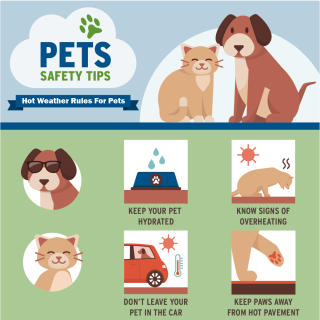
Steps to keep pets safe from heat-related illness and death for the American Red Cross
“Extreme heat can turn deadly in minutes for the animals who rely on us to keep them safe,” said Aimee Lauer, managing director of global animal disaster, Humane World for Animals. “Simple precautions—like never leaving pets in cars, preparing for power outages and adjusting walk schedules—can prevent tragedy and ensure a fun, safe summer with your pet.”
Hot Weather Dangerous for Pets ─ How to Keep Them Safe
Don’t leave your pet in a hot vehicle, even for a few minutes. The inside temperature of the car can quickly reach 120 degrees even with the windows cracked open.
Summer’s extremely hot weather has arrived, a situation that can be dangerous for your family pets. The American Red Cross has steps you can take to help ensure your four-legged friends stay safe this summer.
HEAT STROKE Animals can suffer heat stroke, a common problem for pets in warmer weather. Dogs with short noses or snouts, like the boxer or bulldog, are especially prone to heat stroke, along with overweight pets, those with extremely thick fur coats or any pet with upper respiratory problems such as laryngeal paralysis or collapsing trachea.
Some signs of heat stroke in your pet are:
Heavy panting and unable to calm down, even when lying down
Brick red gum color
Fast pulse rate
Unable to get up
If you suspect your pet has heat stroke, take their temperature rectally. If the temperature is above 104 degrees, cool the animal down. The easiest way to do this is by using the water hose. Stop cooling the animal when the temperature reaches 103 degrees. Bring your pet to the veterinarian as soon as possible as heat stroke can lead to severe organ dysfunction and damage.
STEPS TO KEEP YOUR PET AT THEIR BEST:
Give your pet plenty of exercise.
Make sure your pet has plenty of fresh, cool water and shade.
Make sure your pet has yearly checkups and is up to date on vaccines, especially mandated rabies vaccines.
Keep dogs on leashes outside – another animal may be too much temptation.
Know how to perform CPR and provide basic first aid until veterinary care is available.
Download the Red Cross Pet First Aid app for more information on how to include pets in emergency preparedness plans. The app also features step-by-step instructions for first aid emergencies, toxic substances, a pet profile for storing tag ID, photo and medical information, early warning signs for when to contact a veterinarian and an animal hospital locator. Users can find it in smartphone app stores by searching for the American Red Cross, texting GETPET to 90999 for a link to download the app or going to redcross.org/apps.
You can also take the Red Cross Cat and Dog First Aid online course so you’ll know what to do in an emergency until veterinary care is available. You can access the course on your desktop or tablet at redcross.org/catdogfirstaid and go through the content at your own pace. The interactive course includes:
How to determine a pet’s normal vital signs so owners can notice if there are any irregularities.
Step-by-step instructions and visual aids for what to do if a pet is choking, needs CPR, has a wound, or is having a seizure.
Information on preventative care, health and tips for a pet’s well-being.
Summer’s extreme heat can be dangerous for you too. Visit here to get information about the steps you should take when the temperatures soar.